
UN-REALISED
On responsibility, attachment and the psychological difficulty of letting go.
Table of Contents
A structured exploration of emotional attachment to clothing, donation behaviour and the design of psychological space.
Data Research
Quantitative and qualitative research into donation behaviour patterns and emotional barriers.
Client Context
Understanding TRAID as a charity-led second-hand fashion organisation and its mission.
Field Observation
Ethnographic fieldwork documenting real behaviour in donation and retail spaces.
Key Insight
The psychological difficulty of letting go: clothing as identity, memory and second skin.
Concept Positioning
Reframing donation as psychological completion — from ending to continuation.
The First Pause
A visual symbol of suspended decision — the chair as emotional buffer, the moment before letting go.
Narrative Journey
The three-phase moving campaign strategy: build-up, main event, and continuation.
Client
Context
A UK-based charity transforming donated clothing into funding for workers' rights and environmental sustainability around the world.
Charity-led Second-hand Fashion
TRAID transforms donated clothing into funding for global garment worker rights and environmental programmes. Every item tells a story beyond its fabric.
Sustainability + Social Responsibility
With over 70 stores across the UK, TRAID diverts tonnes of clothing from landfill each year, championing circular fashion as a vehicle for systemic change.
Reliance on Public Donation Behaviour
The organisation's impact depends entirely on individuals choosing to donate. Yet research reveals donation rates remain surprisingly low despite awareness of sustainability issues.
Emotional Barriers Affecting Donations
People are not apathetic — they are attached. The sentimental value of clothing creates psychological resistance that even the most motivated donors struggle to overcome.
"Donation communication is overly functional and lacks an understanding of the emotional process people go through when parting with their clothes."

Field Observation
What we witnessed in real spaces — behaviours, environments, and the silent stories of uncollected donations.
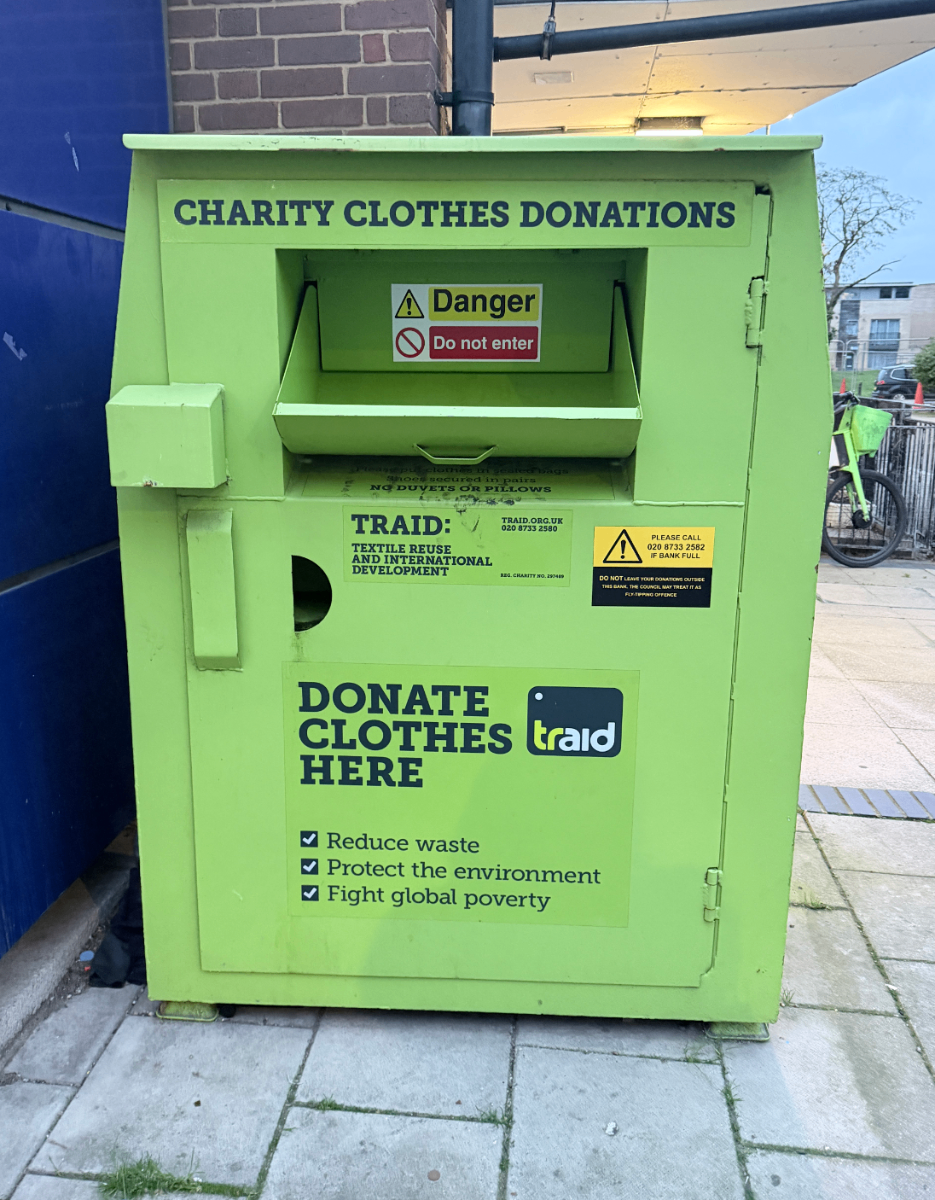
Visually understated donation points
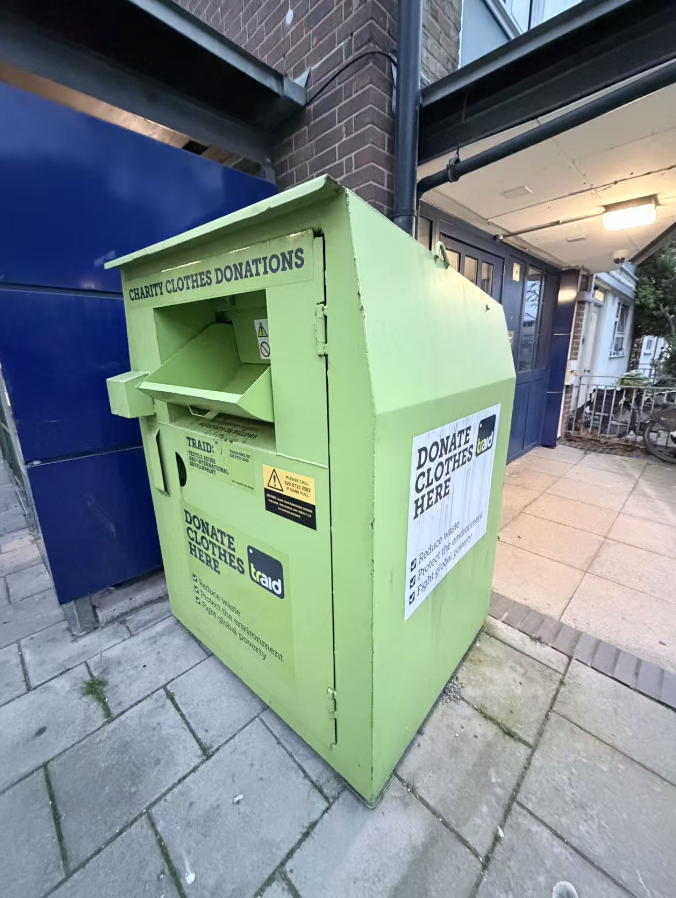
Scanning quickly — ignoring donation points
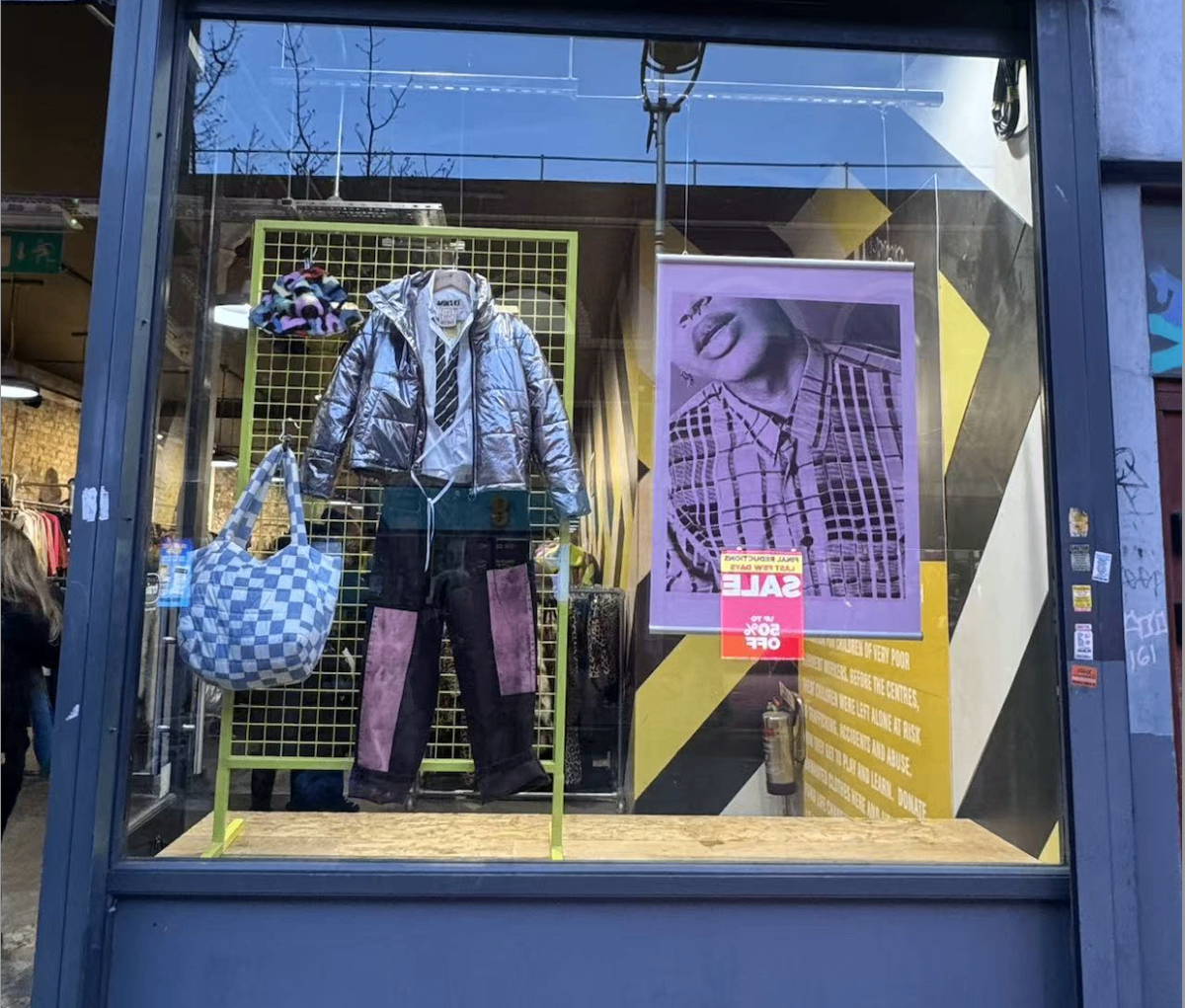
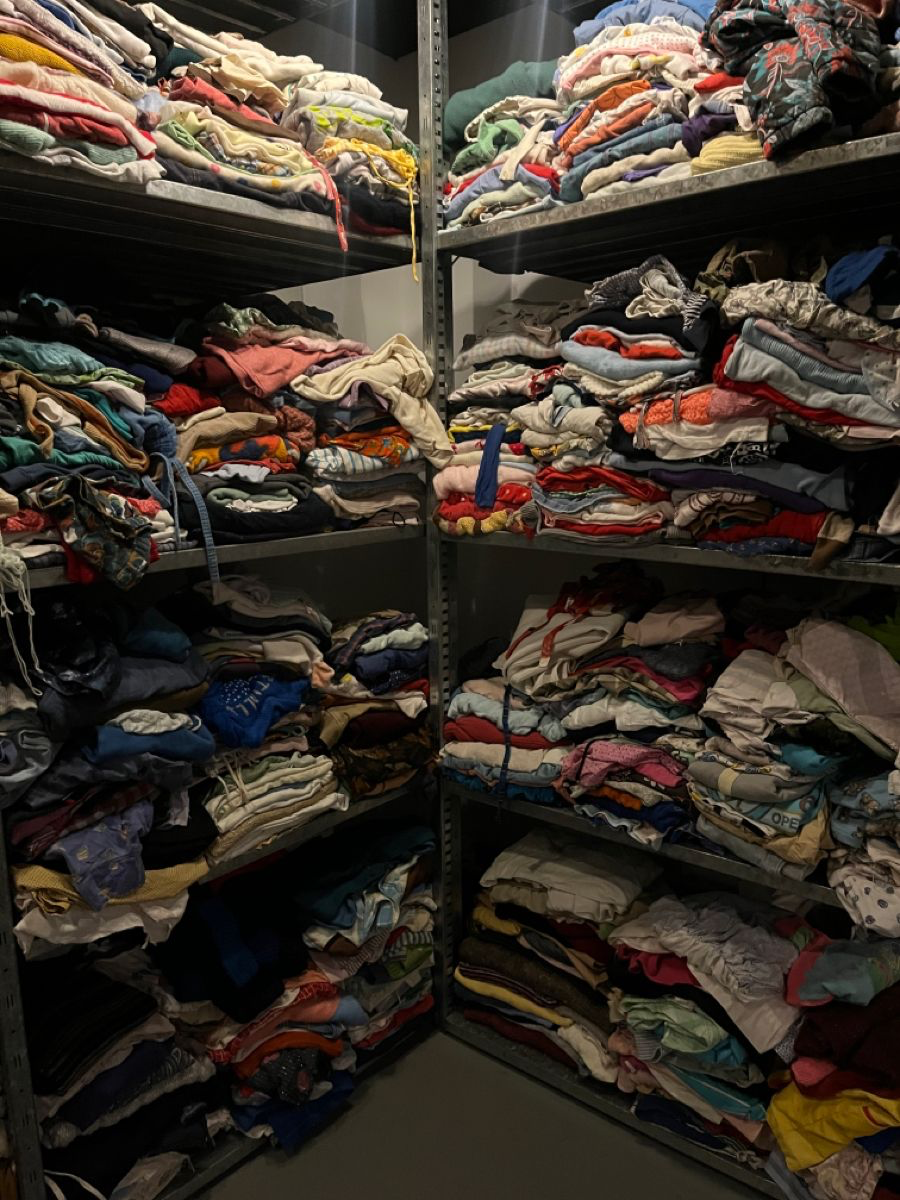
Spaces lacking emotional pauses
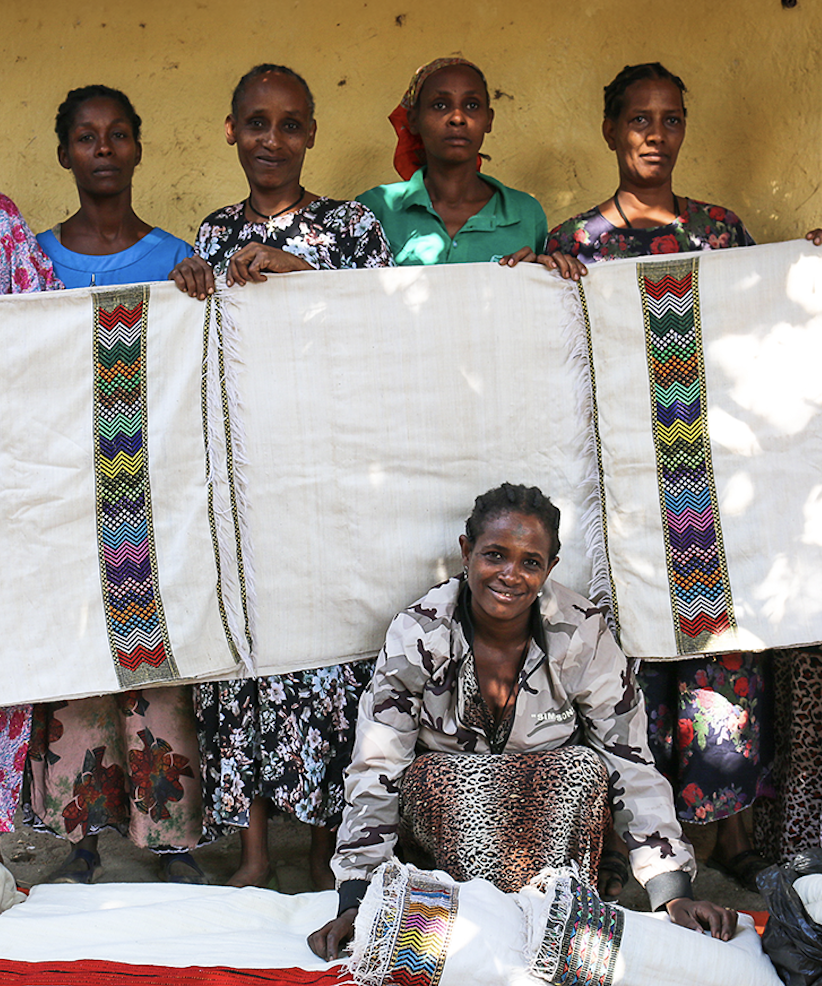
The physical weight of letting go
Donation points go unnoticed in over 70% of observed visits
Average dwell time near donation areas: under 8 seconds
No emotional prompts — purely transactional language
Visitors scan and move on without pausing to reflect
Spaces lacking emotional pauses
Our field research revealed that donation environments are engineered for efficiency, not emotion. There is no designed moment of reflection — no acknowledgement of what it means to give away something that was once yours.
“Letting go is letting go
of a life once lived.— Core Insight
The "Second Skin" Concept
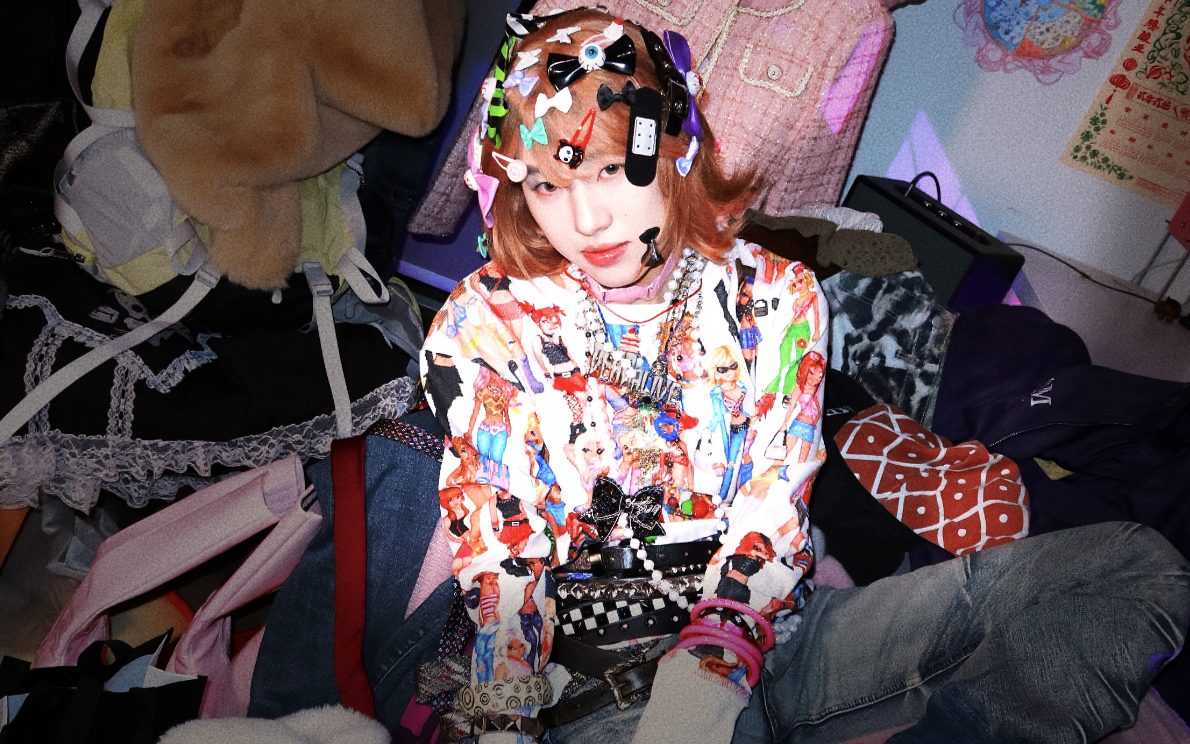
Clothing functions as an external layer of emotional identity — a second skin that carries our stories, our relationships, and our psychological history.
It is not that people are unwilling to donate — it is that they do not know how to "say goodbye."
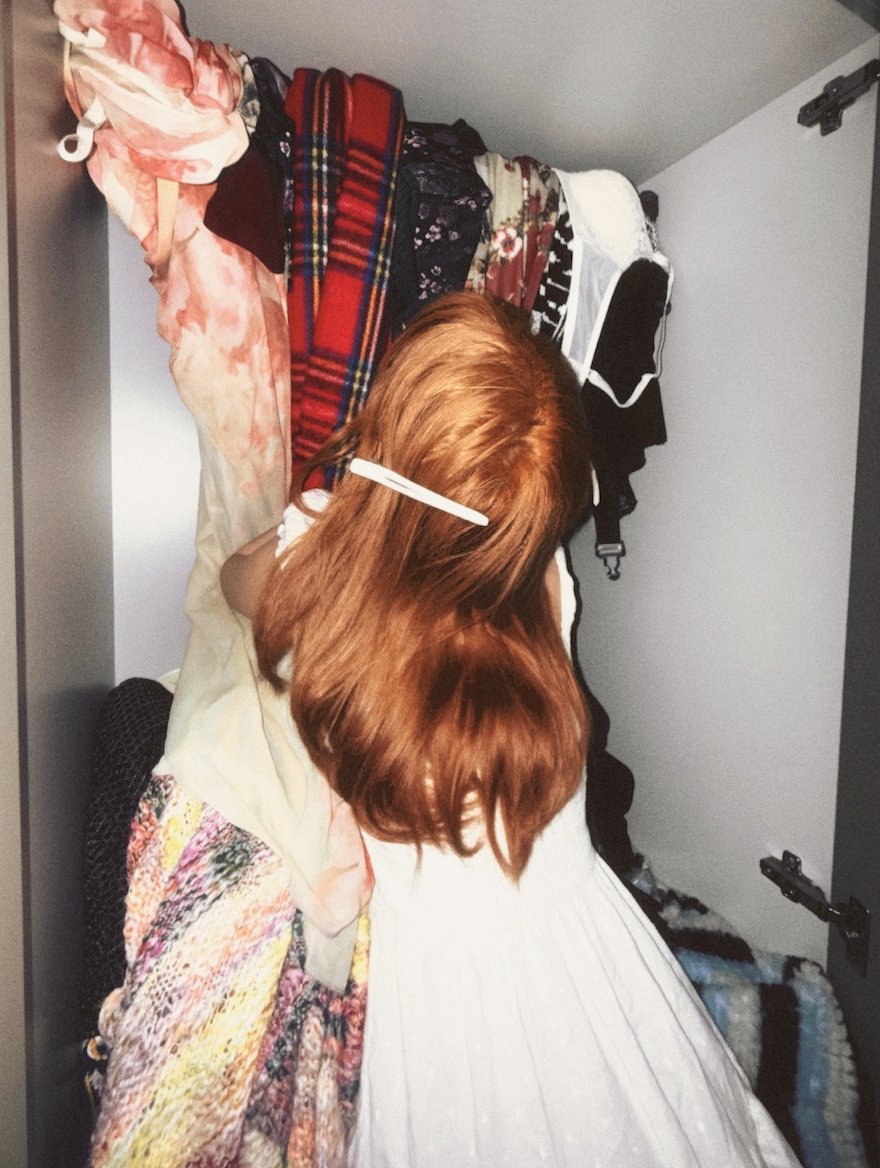
Clothing as Memory
Each garment holds traces of moments, relationships and versions of self. To donate is to handle these memories physically.

Concept Positioning
Four interconnected pillars that reframe the act of clothing donation as an emotionally intelligent, human-centred experience.
Donation is a psychological completion
Not a transaction, not a disposal — but the deliberate closing of a chapter. The act of donating acknowledges what the garment meant.
Allowing Hesitation and Pause
Emotional processes cannot be rushed. Design must create space for ambivalence, for the moment between knowing you should donate and feeling ready to.
From Ending to Continuation
The garment does not disappear — it continues. Another person's story begins where yours paused. Donation becomes an act of generosity and legacy.
Empowering Donors with Control and Emotional Space
The donor must feel they are choosing, not complying. They must be met with empathy, given time, and offered a form of farewell that feels meaningful.
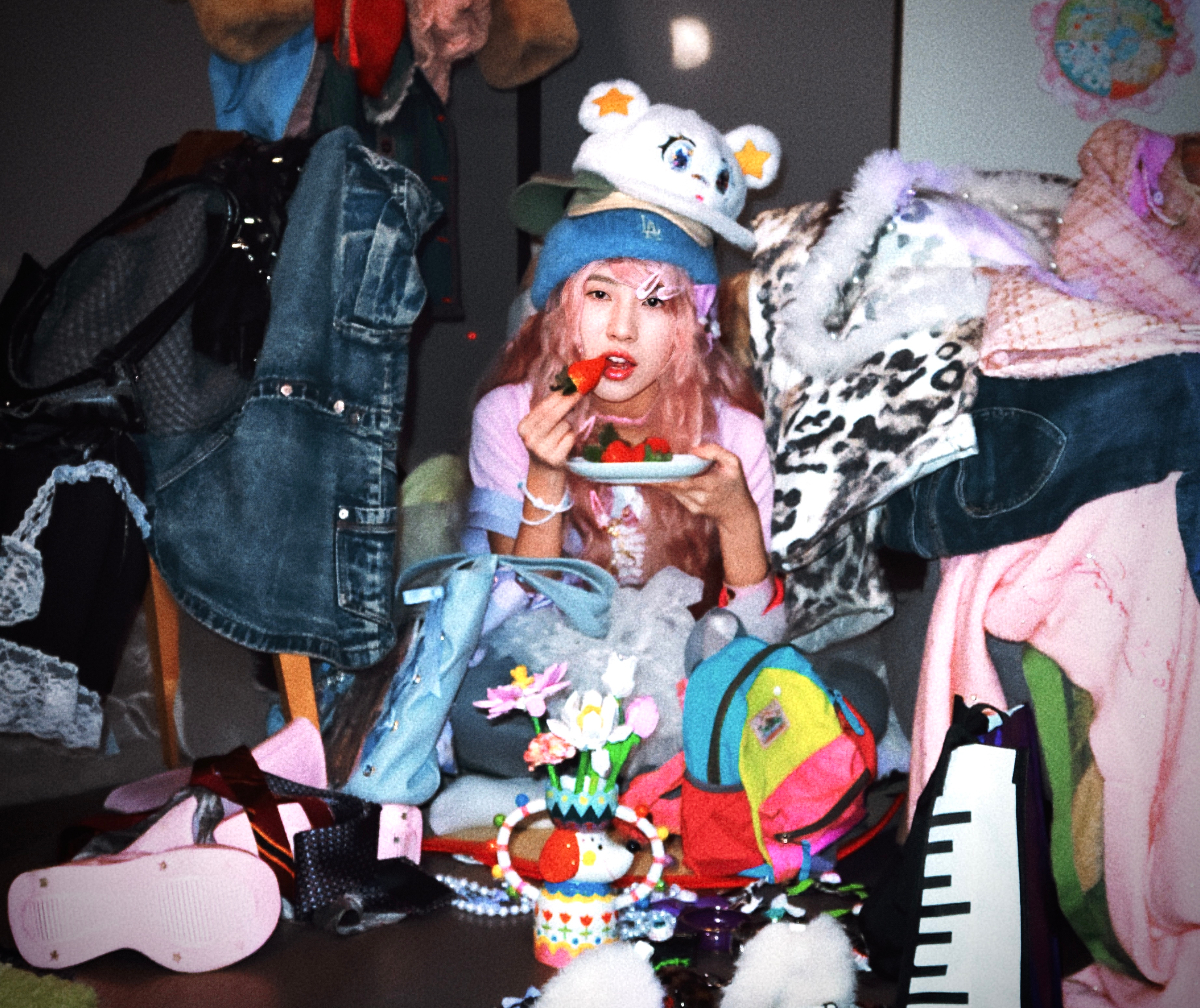
"Play is not entertainment — it is a psychological space of permission, allowing users to explore, pause and decide without pressure."
From Idea to
Built Space
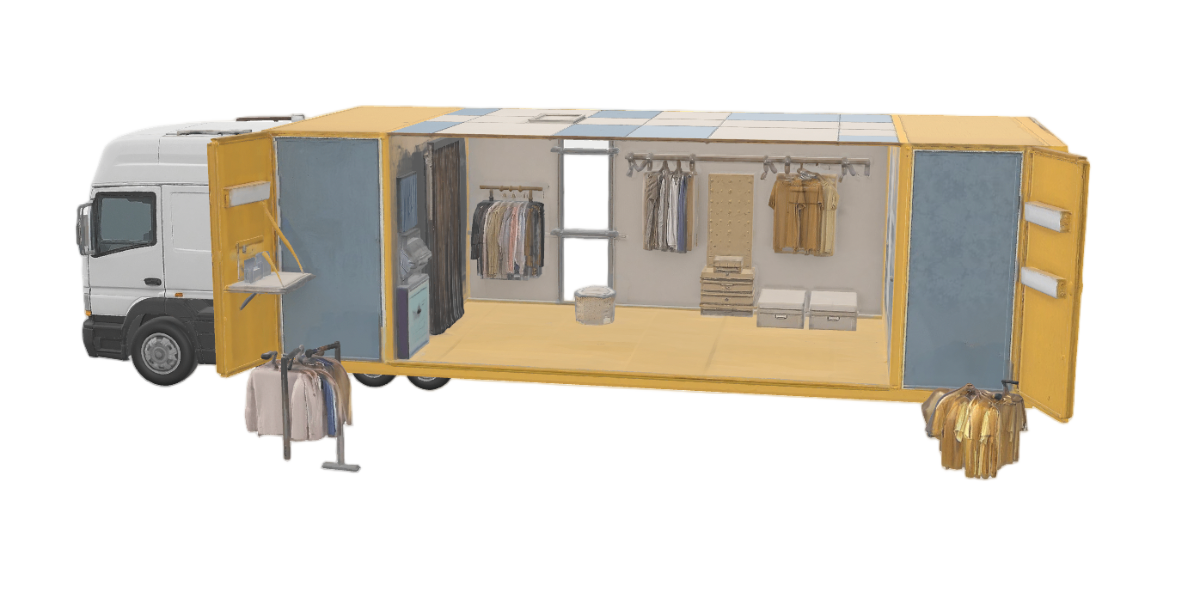
A three-stage design process translating raw concept into a spatial reality — sketch, model, render.
Concept Visualisation
From Sketch to System
The project began with hand-drawn concept sketches, mapping out a simplified spatial system for donation and exchange. The focus was on clarity — defining zones, flow, and user interaction within a limited space.
Spatial Translation
3D Modelling
The concept was then translated into a 3D model with Blender, allowing the interior layout to be tested in scale and proportion. This stage refined the positioning of key elements, ensuring the space remained functional, minimal, and intuitive.
Final Rendering
Rendered Reality
The final rendered outcome presents the truck as a realistic mobile retail environment. Materiality, lighting, and spatial atmosphere were developed to communicate how the system operates in reality.

The First Pause
Not everything needs to be let go immediately.
placeholder
Hover to reveal each layer
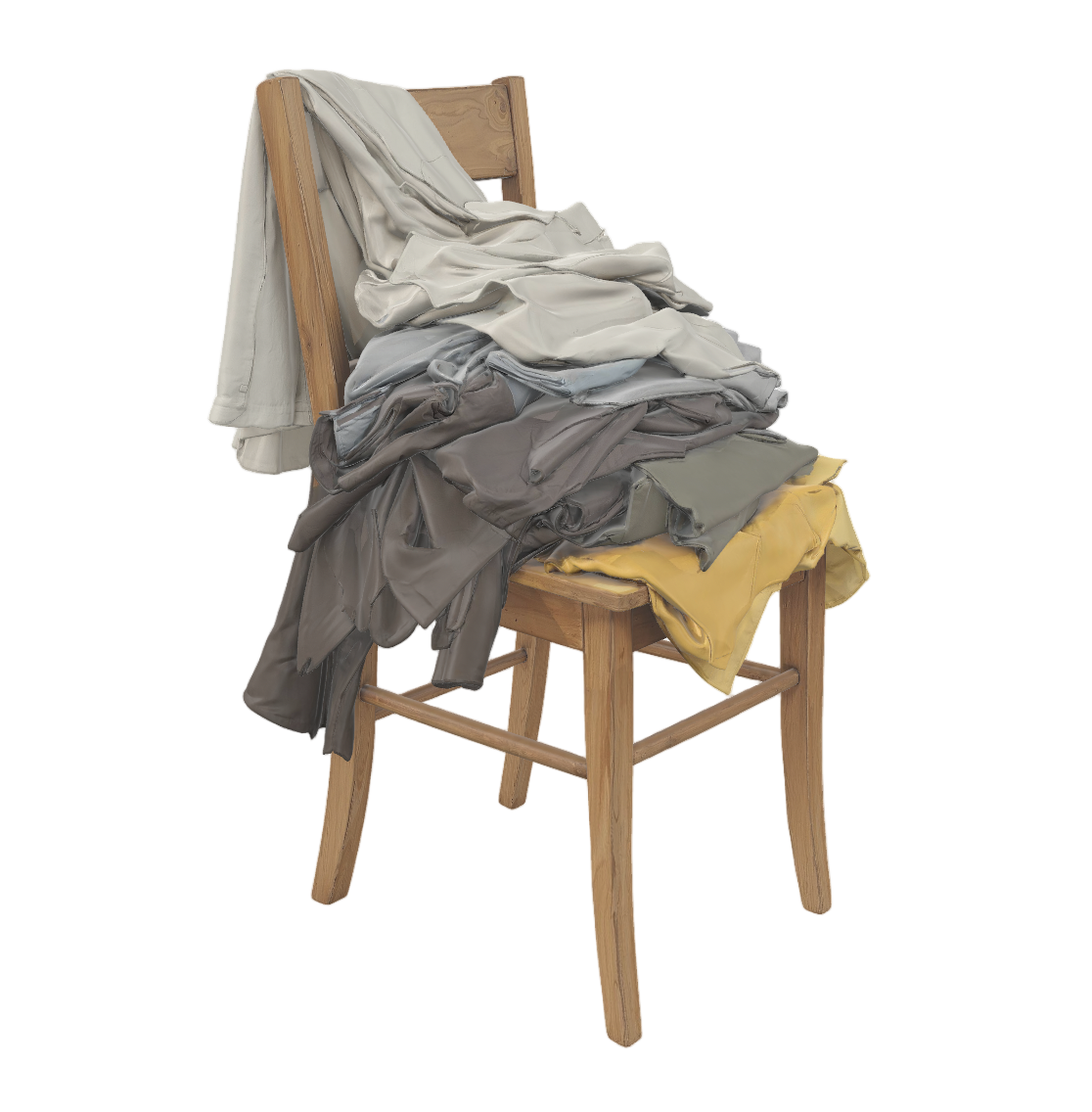
This chair is not a piece of furniture — it is a suspended moment. It carries not the garments themselves, but the emotions, memories and decisions that have not yet been resolved.
The stacked clothes present a state of unstable yet continuous accumulation — neither tidied, nor discarded. A space suspended between “keeping” and “letting go”.
Emotional Accumulation
Each layer of clothing represents a relationship deferred from processing. These garments are not forgotten — they are temporarily placed. The act of stacking is itself an expression of emotion, not disorder.
The Pause Before Action
In conventional retail spaces, users are urged toward rapid decisions. This chair creates the opposite moment: a space that permits hesitation, procrastination, and lingering without judgement.
From Object to Symbol
The chair, as an everyday object, is recontextualised. It becomes an emotional buffer — a permission slip to remain undecided, to hold on a little longer before release.
Relation to the
UN-REALISED Project
This visual symbol serves as one of the core metaphors within UN-REALISED. The chair represents the moment of incompleteness that exists before any action takes place — the threshold that every system in the project seeks to gently address.
The Garment Passport
Continuity & Regeneration
The Traid Truck
Movement & Transfer
The Donation Journey
Psychological Process
The chair represents: the “unfinished” moment before all action begins.
“You don't have to let go yet.”